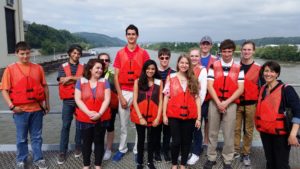
 The last day of the 2016 STEM Careers Tour began with a visit to the Emsworth Locks and Dams which is operated by the U.S. Army Corp of Engineers. It is one of six major river facilities on the Ohio River in the Pittsburgh Engineering District located near the towns of Emsworth, Avalon and Ben Avon, Pennsylvania, 6.2 miles below Pittsburgh. It was built in 1919 at a cost of $5.8 million and has undergone several renovations. Today it averages about 470 commercial lockages every month and about 375 additional lockages of pleasure crafts during the summer months.
The Pittsburgh District of the US Army Corp of Engineers is responsible for providing the engineering expertise that is needed for the design and upgrades of the Emsworth Locks and Dams. Located in the William S. Moorhead Federal Building in downtown Pittsburgh they are responsible for water infrastructure, environmental management and restoration, response to natural and manmade disasters, and engineering services.
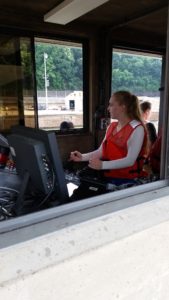 When we arrived for our tour, we were outfitted with life jackets, and began the walk over to the lock system. We were fortunate to see a commercial barge in the lock chamber waiting for the water to rise, so it could continue its journey upstream. As the vessel waited in the chamber, valves gradually let water into the chamber from the upper pool behind the dam through culverts in the lock wall. It usually takes about an hour for the water level to reach the desired height. A boat usually waits about an hour for the water levels to reach equilibrium. No pumping is necessary since the water moves by gravity. Once the water reached the same level on both sides of the gates, one set of gates was opened to let out the boat. Our guide let the students operate the controls and open the lock gates. So cool!
We next toured the gated dams located at the Emsworth site. The gates dams are used to increase the control of the water levels in the river to help aid in river transportation. They have no effect, neither positive nor negative, on the flood heights. There are large concrete piers that house the equipment that raises and lowers the dams. The amount of water passing under the gates is increased when the river flow is high and it is decreased when river flow is low in order to maintain the river at a constant level. Due to the high piers the dam is easily seen from downriver, however boaters still need to remain caution for they can be caught in the strong currents that exist on either side of the dam. The view from on top of the dam was breathtaking, but the tour is not recommended for those with a fear of heights.
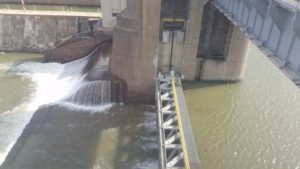 Touring the Emsworth Locks and Dams was definitely a highlight of the 2016 STEM Careers Tour. We were so fortunate to have a beautiful to tour and arrive during a lockage!

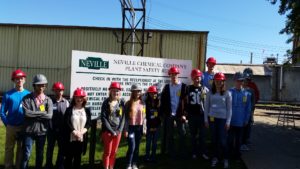 The second day of the 2016 CWNC STEM Careers Tour began with a visit to Neville Chemical located on Neville Island, an island on the Ohio River about 10 miles from Pittsburgh, Pennsylvania. Neville Chemical began in 1925 producing coumarone-indene resin from coke co-products that were being generated from the steel manufactures. During World War II, the company produced many specialty chemicals for the government. In the late 1940’s, Neville saw the development of petroleum cracking units as a new and innovative opportunity. Today Neville Chemical Company is one of the largest produces of hydrocarbon resins and solutions. Neville products are used for the manufacturing of printing inks, adhesives, rubber goods, plastics, paints, coatings, and concrete cure.
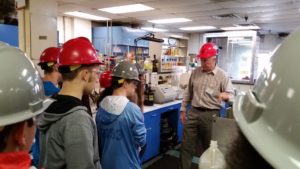 After being outfitted with hard hats and safety glasses, we began our tour of Neville Chemical by walking through the outdoor facility. Our guide was Paul Sauers, manager of raw materials and special products at Neville with over 33 years of experience! He guided us first through the warehouse where we saw hundreds of pallets full of sacks of finished product. Each sack of finished product is labeled with a unique code that enables all of the raw materials that were used to make the product can be traced in case any quality issues occur. We were then led through the outdoor operation facility that consisted of tanks for storing the raw materials, reactors for the polymerization, heat exchangers, distillation columns for separating materials and pipes connecting everything. It was amazing! After learning about the equipment and process for making hydrocarbon resins, we toured the Quality Control Lab that ensures that the finished product meets its desired specifications. Lastly, we visited the Research and Development Lab equipped that focuses on developing new products to meet the needs of the customer and enhancing the current products to be more efficient, safer, and more cost-efficient.
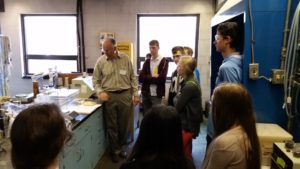
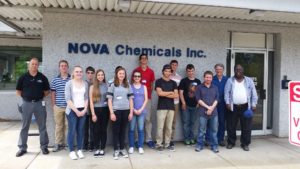 On Wednesday, June 15th, the 2016 CWNC STEM Careers Tour visited Nova Chemicals’ Beaver Valley plant. Nova Chemicals is a leading producers of plastics and chemicals. They develop and manufacture materials for customers worldwide who produce consumer, packaging and industrial products. The Beaver Valley site manufactures expandable polystyrene (EPS) resins and advanced foam resins. It is located in Monaca, Pennsylvania, about 25 miles northwest of Pittsburgh. The site was build by the U.S. government in 1942 as part of the United State Synthetic Rubber Program during World War II and was used for producing synthetic rubber raw materials. In 1955 the site began producing expandable polystyrene resins and in 1983 advanced foam resins. It has transferred through various owners through the years and today, the Nova Chemicals plant is part of the International Petroleum Investment Company of Abu Dhabi. There are about 250 people employed in the manufacturing, technology and commercial departments at Nova Chemicals’ Beaver Valley site.
 “America is built on energy.”
 Due to safety concerns we were not able to visit an actual Penn Energy drilling facility for our tour, but we were provided an overview of their operations and introduced to many of the people who make it possible.

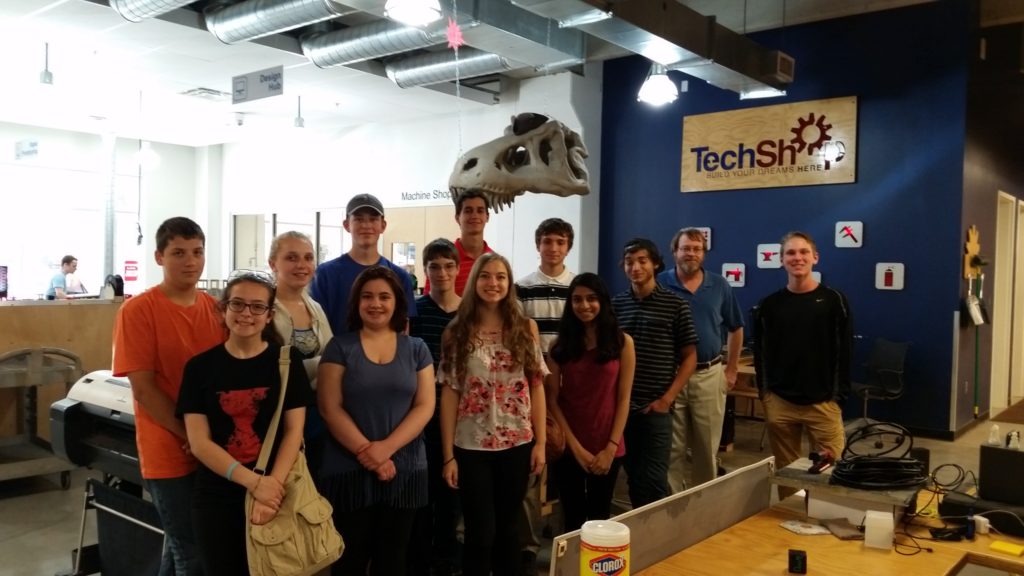 One of the last stops on our June 2016 CWNC STEM Careers Tour was TechShop Pittsburgh located in Bakery Square in Pittsburgh’s East End.
  Our guide, Justin Harvilla, began as a member at TechShop Pittsburgh, joining to have a place to do sculpting. After being a member, he joined the staff. He provided us with a great tour of the facility, giving us an overview of all the equipment available at the facility. After touring, we were treated to a demonstration of the laser cutter. The laser cutter enables carving and whittling of cardboard, glass, wood and other materials with amazing accuracy. Laser cutting directs a high-power laser through optics. The focused laser beam is directed at the material, which then melts or burns the material, leaving an edge with a high-quality surface finish. As opposed to being controlled manually by hand wheels or levers, the laser is guided by precise programmed commands.
 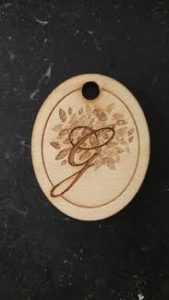 Advantages of laser cutting over mechanical cutting include an easier ability to secure the material as it is being machined and a reduction in contamination of the material. Additionally precision may be better, since the laser does not wear during the process. As a souvenir of our visit, our guide presented us with laser cutting the the ‘Grow a Generation’ tree. So cool!
 Biology students from Cardinal Wuerl North Catholic High School embarked on a STEM Careers Tour!
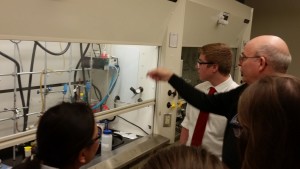 Students then toured the organic chemistry lab at Knopp Biosciences, where their chemists are working to develop organic molecules designed to hit specific biological targets. Once the compounds are developed, they are tested by the biologists to determine if they are causing the desired response in the cell line. The biologist communicates her findings back to the chemist, so she can alter the molecule in an effort to get the desired response in the cells. Once a compound shows the desired result in the lab, it is shipped out for further testing on lab animals to see not only if the desired result is still achieved but also, what other responses the drug may cause in the animal. Biologists at Knopp Biosciences are also studying how a small molecule they developed reduces a variety of white blood cells and assists in the treatment of asthma.
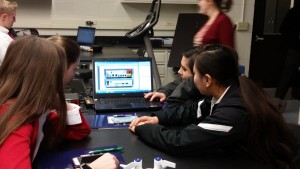 The next stop on the tour was the Department of Biological Sciences at Duquesne University. The department has 16 faculty members focused on teaching and research. We ate our brown bag lunches while listening to a student panel of graduate and undergraduate biology students talk about their experience transitioning to college, why they chose to major in biology, and why they decided to continue with a graduate degree. They advised students to master time management, join extra-curricular activities on campus, and develop a rapport with your professors. After the student panel, several professors spoke to us about their research. Unique to the Department of Biological Sciences at Duquesne University, we learned about the SuperLab course, where students get hands-on laboratory experience by identifying a mystery micro-organism one semester and confirming their result via DNA testing a second semester.
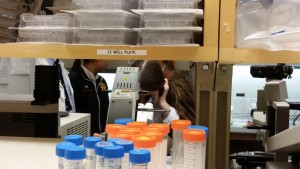 For our last stop of the STEM Careers Tour, Cardinal Wuerl North Catholic students visited The Hillman Cancer Center where they toured the labs of Dr. Lisa Butterfield. The labs study the interaction between the immune system and cancer. Dr. Butterfield recommended that students who have an interest in research to get experience in different labs and with different areas of research to understand what they like to do. She said that she is constantly reviewed and critiqued, but that it makes her better at what she does. The next tour at the Hillman Cancer Center was the labs of Dr. Timothy Burns that study the development of targeted therapies for treating lung cancer. Dr. Burns has both his PhD. And MD., which he says enables him to treat the patients that are in his clinical studies. Students were encouraged to apply to the