 AP Biology students from Cardinal Wuerl North Catholic High School visited the Department of Structural Biology at the University of Pittsburgh. Students were led on a tour by Dr. Rieko Ishima, an associate professor and a principal investigator in the department. Dr. Ishima oversees a team of research associates and fellows who are currently working to determine protein structure and dynamics using nuclear magnetic resonance.
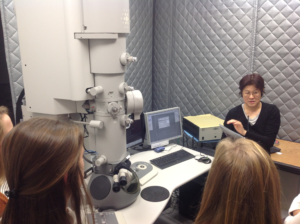
Protein images are beyond tiny! The nuclear magnetic resonance spectroscopy of proteins does not ‘take a picture.’ Rather, it relies on complex mathematical calculations to build a three dimensional image of the protein.
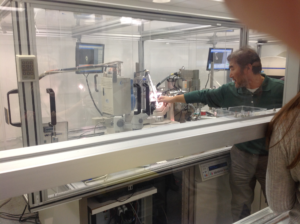 During Dr. Ishima’s tour, students were shown various equipment used in cryo-electron microscopy, nuclear magnetic resonance, and x-ray crystallography. Students were fascinated not only by the incredible detail achieved in the digital images produced by nuclear magnetic resonance (NMR), but also by the sheer size of the equipment required to generate those results.
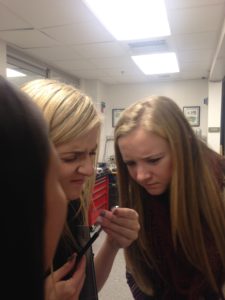
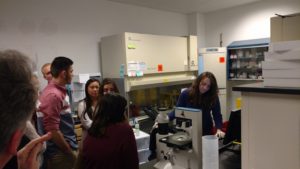
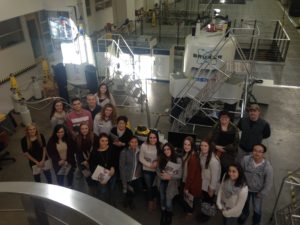 Though NMR examines molecular structure and dynamics at the atomic level, the spectrometers required to view particles that small are extremely large. Pitt has seven spectrometers in this department, and they are housed in 10,000 square foot laboratory. The students were amazed to learn that when the spectrometers were delivered, the first floor windows were removed to allow the equipment to be lowered into the NMR lab! We are standing in front of a two magnets that had to be lowered by crane through an open window.
 Students were also able to tour the cryo-electron microscope facility, where three electron microscopes allow researchers to engage in structural analysis of proteins, viruses, cellular organelles and bacterial cells. Finally, Dr. Ishima and her team led students to the x-ray crystallography lab. Here, researchers are able to grow, store, and monitor crystals. Once crystals are ready for analysis, x-ray beams and image plate detectors are used to collect data about protein structures at the atomic level. While scientists in the lab often use tiny tools to manually transfer crystals for analysis, the lab also is equipped with a robot that can mount and collect data from up to 80 crystals for rapid analysis.
The field is extraordinary.
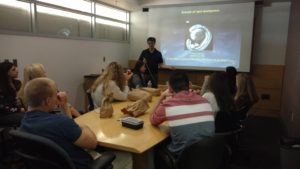 On November 18, 2016, AP Biology students from Cardinal Wuerl North Catholic High School participated in a STEM Careers Tour which included a visit to the Department of Developmental Biology at the University of Pittsburgh. Specifically, students were able to interact with Dr. Michael Tsang, an associate professor who is currently conducting research in Pitt’s zebrafish aquaria. In the zebrafish facility, one of the largest in the world, researchers are engaging in multiple large-scale projects which use the zebrafish to understand how organs such as the liver, kidney and heart develop in the embryo.
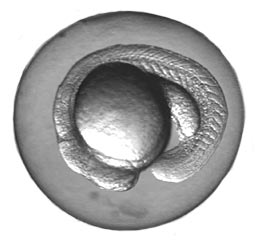 The visit began with a presentation by Dr. Tsang, during which he explained his research and the benefits of experimenting with zebrafish. Students learned that zebrafish are ideal subjects for experimentation because they are small and easily maintained, embryos are transparent and easily visualized during development, and they are able to repair and regenerate damaged tissue. All of the students were fascinated when they learned that, after a few weeks at the bottom of the tank, zebrafish that have sustained a severed spinal cord are able to repair the damage and regain mobility!
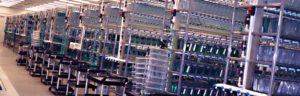 After this presentation, students were able to experience a tour of the zebrafish aquaria, which contains over 11,000 tanks housing over 500,000 zebrafish. While touring the facility, students asked a wide variety of questions about the logistics in place to maintain such a large research lab, and they learned that while the tanks are self-cleaning, university employees spend several hours each day feeding the fish. The rows of tanks with tiny, newly-hatched fish were a highlight of the tour, but the students were most intrigued by the fluorescent green zebrafish. These genetically modified fish carry the gene for Green Fluorescent Protein (GFP), which allows researchers to better identify abnormalities, such as those that lead to Alzheimer’s Disease.
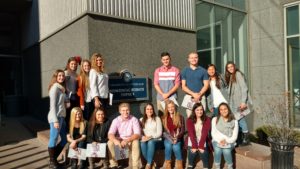 Most importantly, students engaged in dialogue with Dr. Tsang about both the benefits and ethical obligations of animal testing. The visit to the lab, and particularly this conversation with Dr. Tsang, ignited a desire in many of the students to pursue ongoing research with zebrafish. Sixteen AP Biology students from Cardinal Wuerl North Catholic are preparing experimentation results currently being conducted with both adult and embryonic zebrafish for entry into the Pittsburgh Regional Science and Engineering Fair! Mrs. Murray classroom is becoming its own zebrafish aquaria and the contacts she made on the tour have become mentors in her ongoing efforts to make biology come to life for all her students.
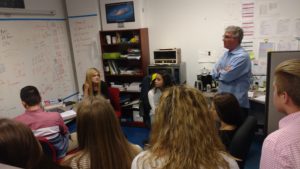 Written by Alex Hoehn and Lena Clerici
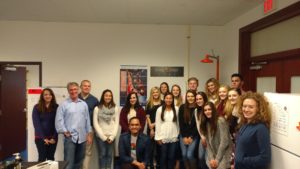 Sharp Edge Labs has launched a patient-driven program with the purpose discovering drugs that prevent or reduce the effects of faulty protein trafficking due to monogenic diseases. These monogenic diseases encompass disorders such as Cystic Fibrosis, Muscular Dystrophy, and Gaucher’s disease. The root cause of these conditions is a due to a defect in one gene caused by improper protein trafficking. Other companies used gene replacement therapy to replace the defective enzyme, permitting proper function. However, Sharp Edge Labs is taking a new route in the journey to accomplish the same goal. Rather than using gene replacement therapy, they are using the “small-molecule” approach. The size of the molecule causes no hindrance when traveling towards the target.
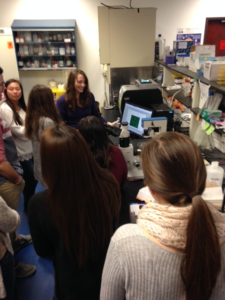 These molecules are targeted towards deformed proteins with the purpose of reconstructing the damaged proteins. Reconstructing the damaged proteins allows proper protein trafficking to resume. Protein trafficking is a “lock and key” task. Each signal chemical has a 3D specific counterpart receptor. If this protein receptor is damaged, the protein does not receive the signal; therefore, the protein does not perform its necessary function, sometimes leading to the aggregation of proteins. This break in the chain of commands results in diseases such as Gaucher’s as well as ALS.
 Today, in Sharp Edge Labs patient program, when a patient enters the trial, a sample of the patient’s cells are used to determine which compounds should be properly used to restore protein trafficking. This approach provides more effective treatments earlier than if the patient was given the compound upon beginning the trial. Sharp Edge Labs currently is running three different trials; Cystic Fibrosis: CFTR Trafficking, Lysosomal Storage Disorders: Trafficking Assays, and Trafficking Defects in Parkinson’s Disease.
 We were able to experience and learn about a drug discovery program that has the potential to revolutionize the medical treatment industry. Contrary to the what we thought as we began the day, these profound discoveries are not only made by companies with large research and development departments. Rather, small companies such as Sharp Edge Labs have the capability to make these types of discoveries.
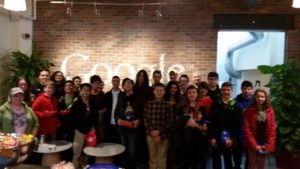
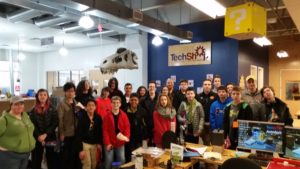 This past weekend, a group of middle school and high school students participated in a STEM Careers Tour of Google and TechShop Pittsburgh. What a exciting day!
 The last day of the 2016 STEM Careers Tour began with a visit to the Emsworth Locks and Dams which is operated by the U.S. Army Corp of Engineers. It is one of six major river facilities on the Ohio River in the Pittsburgh Engineering District located near the towns of Emsworth, Avalon and Ben Avon, Pennsylvania, 6.2 miles below Pittsburgh. It was built in 1919 at a cost of $5.8 million and has undergone several renovations. Today it averages about 470 commercial lockages every month and about 375 additional lockages of pleasure crafts during the summer months.
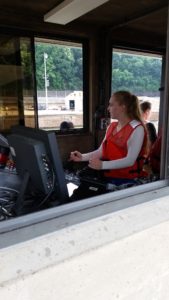 When we arrived for our tour, we were outfitted with life jackets, and began the walk over to the lock system. We were fortunate to see a commercial barge in the lock chamber waiting for the water to rise, so it could continue its journey upstream. As the vessel waited in the chamber, valves gradually let water into the chamber from the upper pool behind the dam through culverts in the lock wall. It usually takes about an hour for the water level to reach the desired height. A boat usually waits about an hour for the water levels to reach equilibrium. No pumping is necessary since the water moves by gravity. Once the water reached the same level on both sides of the gates, one set of gates was opened to let out the boat. Our guide let the students operate the controls and open the lock gates. So cool!
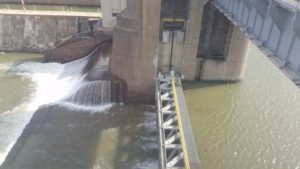 Touring the Emsworth Locks and Dams was definitely a highlight of the 2016 STEM Careers Tour. We were so fortunate to have a beautiful to tour and arrive during a lockage!
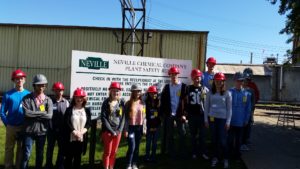 The second day of the 2016 CWNC STEM Careers Tour began with a visit to Neville Chemical located on Neville Island, an island on the Ohio River about 10 miles from Pittsburgh, Pennsylvania. Neville Chemical began in 1925 producing coumarone-indene resin from coke co-products that were being generated from the steel manufactures. During World War II, the company produced many specialty chemicals for the government. In the late 1940’s, Neville saw the development of petroleum cracking units as a new and innovative opportunity. Today Neville Chemical Company is one of the largest produces of hydrocarbon resins and solutions. Neville products are used for the manufacturing of printing inks, adhesives, rubber goods, plastics, paints, coatings, and concrete cure.
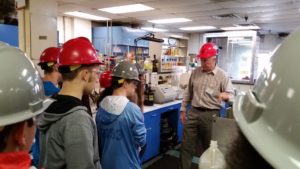 After being outfitted with hard hats and safety glasses, we began our tour of Neville Chemical by walking through the outdoor facility. Our guide was Paul Sauers, manager of raw materials and special products at Neville with over 33 years of experience! He guided us first through the warehouse where we saw hundreds of pallets full of sacks of finished product. Each sack of finished product is labeled with a unique code that enables all of the raw materials that were used to make the product can be traced in case any quality issues occur. We were then led through the outdoor operation facility that consisted of tanks for storing the raw materials, reactors for the polymerization, heat exchangers, distillation columns for separating materials and pipes connecting everything. It was amazing! After learning about the equipment and process for making hydrocarbon resins, we toured the Quality Control Lab that ensures that the finished product meets its desired specifications. Lastly, we visited the Research and Development Lab equipped that focuses on developing new products to meet the needs of the customer and enhancing the current products to be more efficient, safer, and more cost-efficient.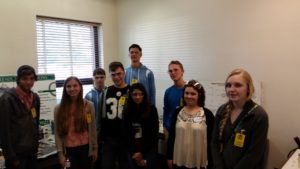
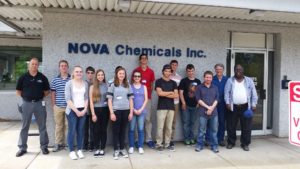 On Wednesday, June 15th, the 2016 CWNC STEM Careers Tour visited Nova Chemicals’ Beaver Valley plant. Nova Chemicals is a leading producers of plastics and chemicals. They develop and manufacture materials for customers worldwide who produce consumer, packaging and industrial products. The Beaver Valley site manufactures expandable polystyrene (EPS) resins and advanced foam resins. It is located in Monaca, Pennsylvania, about 25 miles northwest of Pittsburgh. The site was build by the U.S. government in 1942 as part of the United State Synthetic Rubber Program during World War II and was used for producing synthetic rubber raw materials. In 1955 the site began producing expandable polystyrene resins and in 1983 advanced foam resins. It has transferred through various owners through the years and today, the Nova Chemicals plant is part of the International Petroleum Investment Company of Abu Dhabi. There are about 250 people employed in the manufacturing, technology and commercial departments at Nova Chemicals’ Beaver Valley site.
 “America is built on energy.”
 Due to safety concerns we were not able to visit an actual Penn Energy drilling facility for our tour, but we were provided an overview of their operations and introduced to many of the people who make it possible.

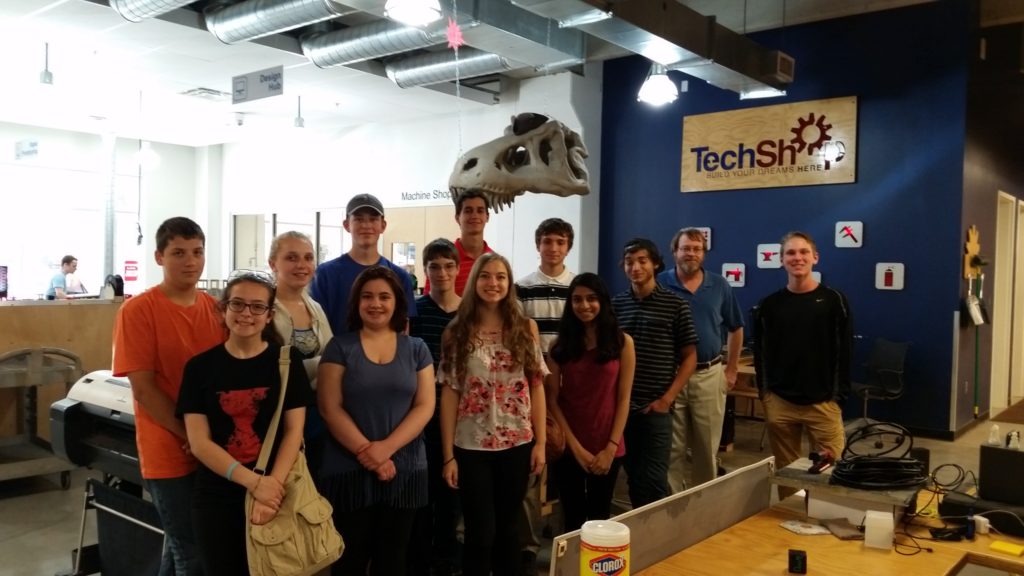 One of the last stops on our June 2016 CWNC STEM Careers Tour was TechShop Pittsburgh located in Bakery Square in Pittsburgh’s East End.
  Our guide, Justin Harvilla, began as a member at TechShop Pittsburgh, joining to have a place to do sculpting. After being a member, he joined the staff. He provided us with a great tour of the facility, giving us an overview of all the equipment available at the facility. After touring, we were treated to a demonstration of the laser cutter. The laser cutter enables carving and whittling of cardboard, glass, wood and other materials with amazing accuracy. Laser cutting directs a high-power laser through optics. The focused laser beam is directed at the material, which then melts or burns the material, leaving an edge with a high-quality surface finish. As opposed to being controlled manually by hand wheels or levers, the laser is guided by precise programmed commands.
 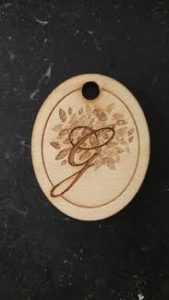 Advantages of laser cutting over mechanical cutting include an easier ability to secure the material as it is being machined and a reduction in contamination of the material. Additionally precision may be better, since the laser does not wear during the process. As a souvenir of our visit, our guide presented us with laser cutting the the ‘Grow a Generation’ tree. So cool!
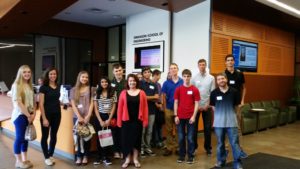 On Monday, June 13, 2016, we began our STEM Careers Tour with a visit to University of Pittsburgh’s Department of Chemistry and Petroleum. Students gathered in a conference room for a brief introductory presentation. While we ate our lunch, four graduate students studying chemical engineering described what a chemical engineer is, and how they differ from a chemist. There are a few main differences between the two occupations: novelty, scale, and sample size.
 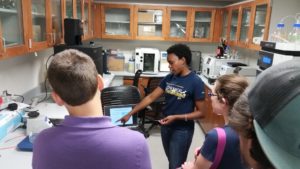 Novelty of products is the first difference. A chemist will use more original thinking to create a new product from scratch, while a chemical engineer refines a product to make it more efficient and consumer friendly. Another disparity between the two is the scale of production. Chemical engineers work on a large scale, like a factory. On the other hand, chemists work on a much smaller scale. This ties into the last difference, sample size. While chemists work with only a few grams, chemical engineers work with tons. After learning the basics, the students were shown the broad range of career opportunities available in chemical engineering and that in order to have the skills “to do cutting edge research,” you need an advanced degree. You “earn the right to think originally” once you’ve earned your Ph.D.
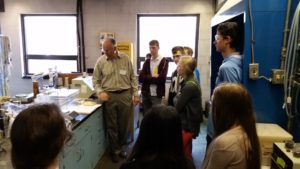
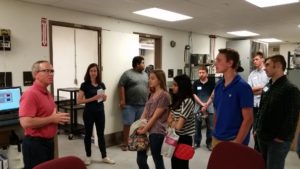 After the introduction, the students headed downstairs to the Unit Operations Lab. Here they were able to meet with a professor who described and performed demonstrations using the lab equipment. He invited students to help him perform experiments with his equipment. One machine showed the reactions taking place to produce soap. The display had line graphs showing whether it was exothermic or endothermic, and if the reaction was at a steady state. The professor also explained that there are four important skills to succeed in industry: equipment, report writing, presentation, and working in groups. The Unit Operations Lab demonstrated how processes are started on a small scale so they can later be scaled up.
 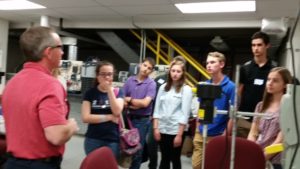 Once the tour of the Unit Operations Lab concluded, students split up into four groups to tour the Little Lab, Banerjee Lab, Veser Lab, and the 11th Floor Computational Labs. At the Little Lab, they often study Biomimetic strategies. The use of synthetic material helps imitate biological interactions and properties. The Little Lab also focuses on controlling deliveries for creating more efficient medicine. For example, instead of taking a pain killer that would send signals all over a person’s body, one could simply take medicine that targets a specific cell, providing more relief and efficiency.
 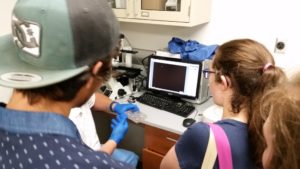 The Veser Lab had lots of equipment in it for its work with nanomaterials – including a scale and a machine that could detect the chemical makeup of a product. In the Computational Labs, where the hypothetical is modeled with computer simulations, the students met some of the college students and learned about what they were studying and researching. One of the materials that the students had discovered was metal organic framework. When it is created, it forms unique and complicated structures. The students are finding ways to utilize this new material.